
Inflation
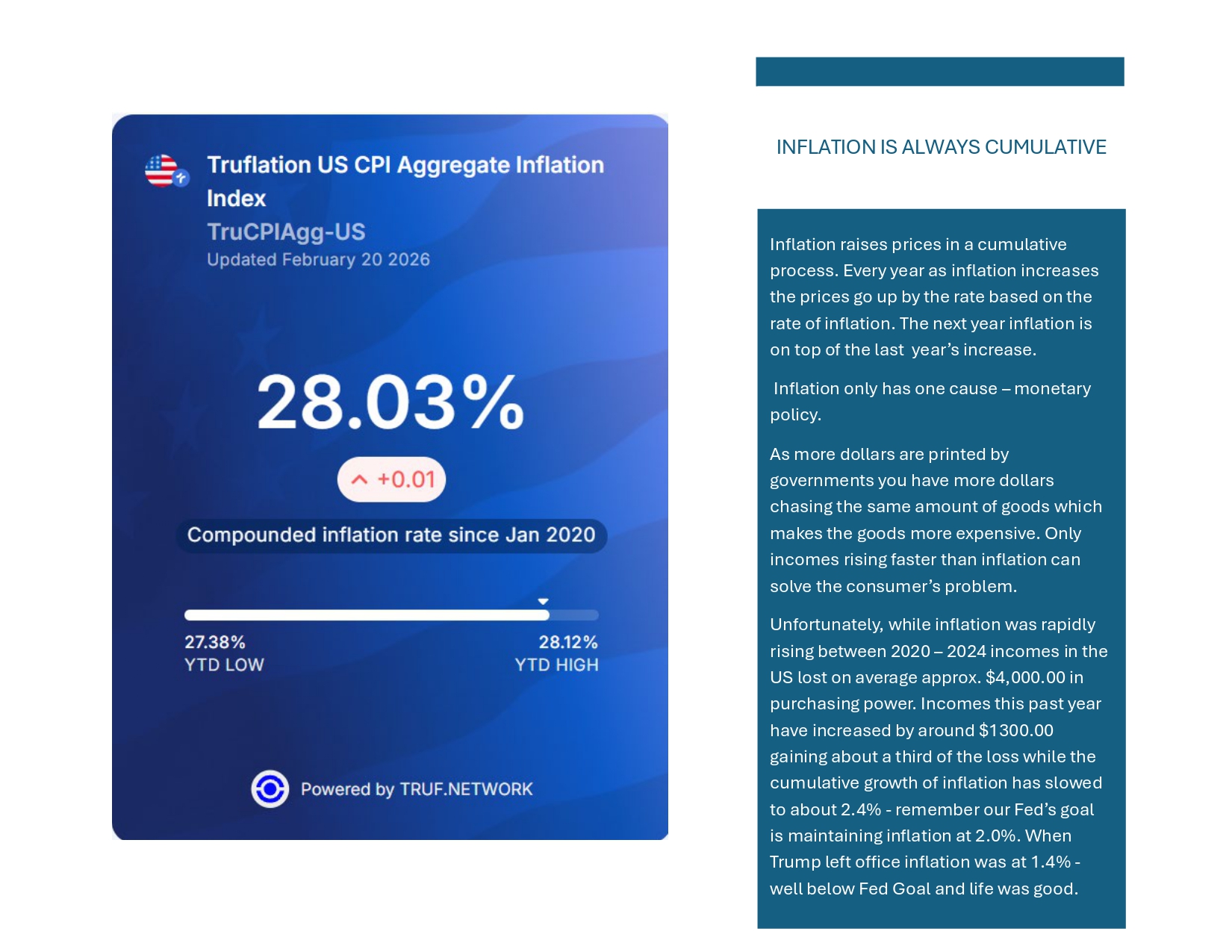
Monetary policy is one of the primary causes of inflation over the long run, but it is not the only cause. The relationship depends on the time horizon. Economists often distinguish between short-term price increases and persistent inflation:
- Long run: Sustained inflation is generally associated with growth in the money supply that exceeds the growth of the economy's production of goods and services. This view is closely associated with the Milton Friedman statement: "Inflation is always and everywhere a monetary phenomenon." The idea is that if the amount of money grows much faster than real output over time, the purchasing power of money tends to decline, causing the general price level to rise.
- Short run: Prices can rise for reasons other than monetary policy, including:
— Supply shocks (such as oil price spikes, natural disasters, or pandemics).
— Sudden increases in demand for specific goods.
— Changes in taxes or regulations.
— Temporary shortages or disruptions to production.
However, many economists argue that while these factors can cause one-time increases in prices, they do not typically produce continuing inflation unless monetary policy accommodates them by allowing the money supply or aggregate demand to continue growing.
In summary:
- If by inflation you mean a persistent, ongoing rise in the general price level, then monetary policy is widely regarded as the dominant long-run determinant.
- If you mean temporary increases in prices, then many non-monetary factors can also be responsible.
This distinction between relative price changes and persistent inflation is central to modern macroeconomics and is accepted, with varying emphasis, across many schools of economic thought.